What Executives Are Looking For in a Media Coverage Report
By Chiamaka Okoli ·
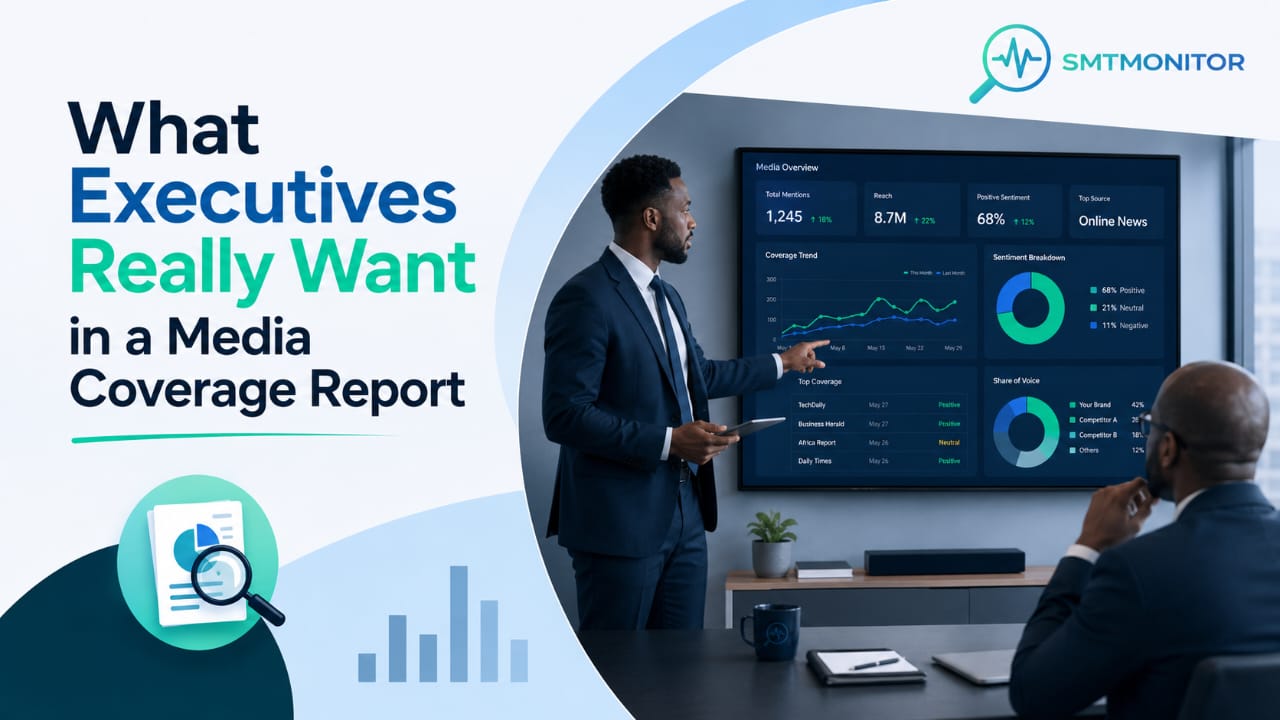
Have you ever spent hours putting together a media report only to wonder if your executives actually found it useful? It's a common challenge. Senior leaders don't usually have time to read pages of media clippings or analyse dozens of news articles. What they need is a report that quickly answers the most important questions: What's happening? Why does it matter? And what should we do next?
That's why effective media coverage reporting isn't measured by the number of articles you include. It's measured by how well your report helps decision-makers understand the bigger picture and make informed choices.
So, what makes a media coverage report valuable to executives and stakeholders? Let's walk through some practical ways to improve your reporting.
1. Start with the Objectives, Not the Data
Before you begin gathering articles and statistics, think about the purpose of the report. Who is going to read it? What decisions are they trying to make? What information will help them the most?
For example, if you're reporting after a product launch, executives may want to know whether key messages were picked up by the media, how much visibility the launch received, and how audiences responded. If the report is about reputation, they may be more interested in media sentiment, emerging risks, or changes in public perception.
Starting with clear objectives helps you decide which data is relevant and prevents reports from becoming overloaded with information that doesn't support business decisions.
2. Highlight the Insights That Matter Most
One of the biggest mistakes in media coverage reporting is treating every media mention as equally important. A report filled with dozens of article links may look comprehensive, but it doesn't necessarily provide meaningful insight.
Instead, focus on what the coverage is telling you. Are journalists consistently highlighting the same message? Is media sentiment largely positive or are there signs of growing concern? Which stories generated the greatest reach or audience engagement? Are there any issues that leadership should be aware of?
By highlighting trends, opportunities, and potential risks, communication teams help executives see the story behind the data rather than just the data itself.
ALSO READ: Media Coverage Monitoring: A Practical Guide for Corporate Communications Teams.
3. Make Your Reports Easy to Read
Even the best insights can lose their impact if they're buried in long, text-heavy reports. Executives often have limited time, so reports should be structured in a way that allows them to understand the key findings quickly. An executive summary at the beginning, followed by clear headings, concise commentary, charts, graphs, and key metrics, can make a significant difference.
Instead of asking readers to interpret pages of raw information, guide them through the findings. Explain what happened, why it's important, and how it compares with previous reporting periods.
A report that's easy to navigate is far more likely to be read, understood, and used to support strategic discussions.
4. Include Recommendations and Next Steps
A report shouldn't end with observations alone. Once you've explained the findings, the next step is to answer an equally important question: What should the organisation do now?
Perhaps media sentiment has improved following a recent campaign. That could present an opportunity to build on positive momentum. On the other hand, if negative coverage is increasing around a particular issue, leadership may need to prepare a communication response or review its messaging.
Strong media coverage reporting connects insights with practical recommendations, helping executives move from information to action.
CATCH UP ON: Why PR Analytics Software Is Essential for Measuring Communications Impact.
5. Review Your Reporting Process Regularly
The most effective reports continue to evolve. As organizational priorities change, executives may require different insights, new performance metrics, or more detailed analysis of specific issues. Taking time to review your reporting process and gather feedback from stakeholders helps ensure your reports remain relevant and valuable. It also provides an opportunity to simplify reports, remove information that no longer serves a purpose, and introduce new ways of presenting insights that better support decision-making.
Communication professionals are placing increasing emphasis on measurement and meaningful reporting. The Institute for Public Relations (IPR) highlights the importance of research, evaluation, and evidence-based communication to help organisations demonstrate value and make informed strategic decisions.
Media coverage reporting plays a crucial role in helping communication teams demonstrate the value of their work. More than simply collecting articles or tracking brand mentions, media coverage reporting helps executives and stakeholders understand how an organisation is being perceived, what conversations are shaping public opinion, and what those insights mean for the business.
Creating reports shouldn't involve hours of gathering articles, organising spreadsheets, and searching for key insights. SMT Monitor simplifies the entire process by bringing your media coverage, analytics, sentiment analysis, competitor activity, and reporting tools together in one intelligent platform.
With real-time monitoring, AI-powered search, automated reporting, and customisable dashboards, communication teams can spend less time compiling information and more time delivering reports that executives and stakeholders genuinely find valuable.
Better reporting leads to better decisions, and better decisions begin with meaningful insights. Explore how SMT Monitor can help your organisation simplify media coverage reporting and deliver clearer, more impactful reports. Visit smtmonitor.com to learn more.